Burnt ends from the brisket point
By Tim · 28 October 2026 · 8 min read
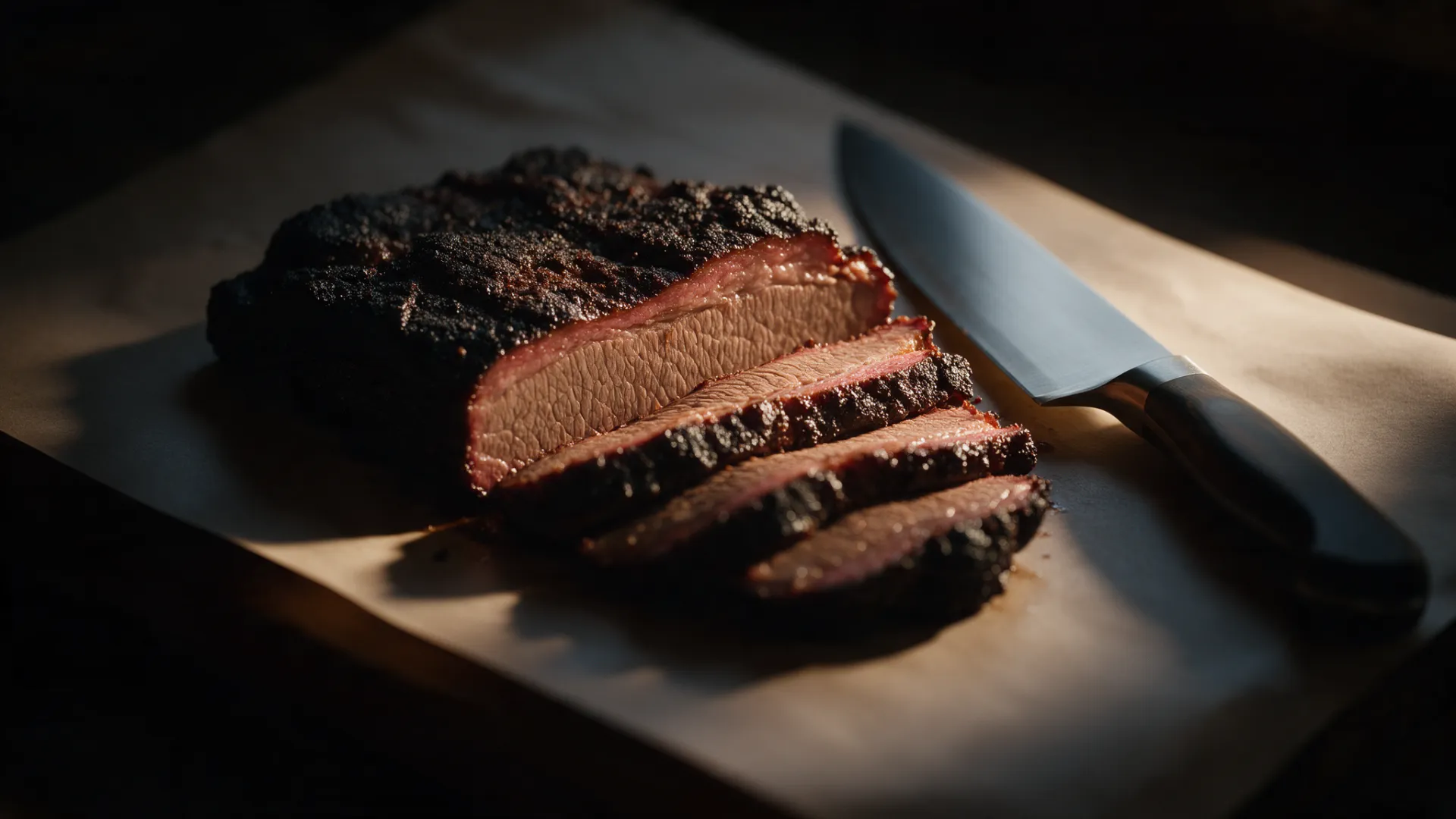
Burnt ends are the brisket point, cooked till tender, cut into cubes and cooked again in sauce until it sets sticky on every side. Separate the point from the flat at the wrap, at about 74°C. Cube it once it probes tender, then give the cubes 1–2 hours in a sauced pan until the glaze has set.
On this page · 10 sections
Which piece do you ask your butcher for?
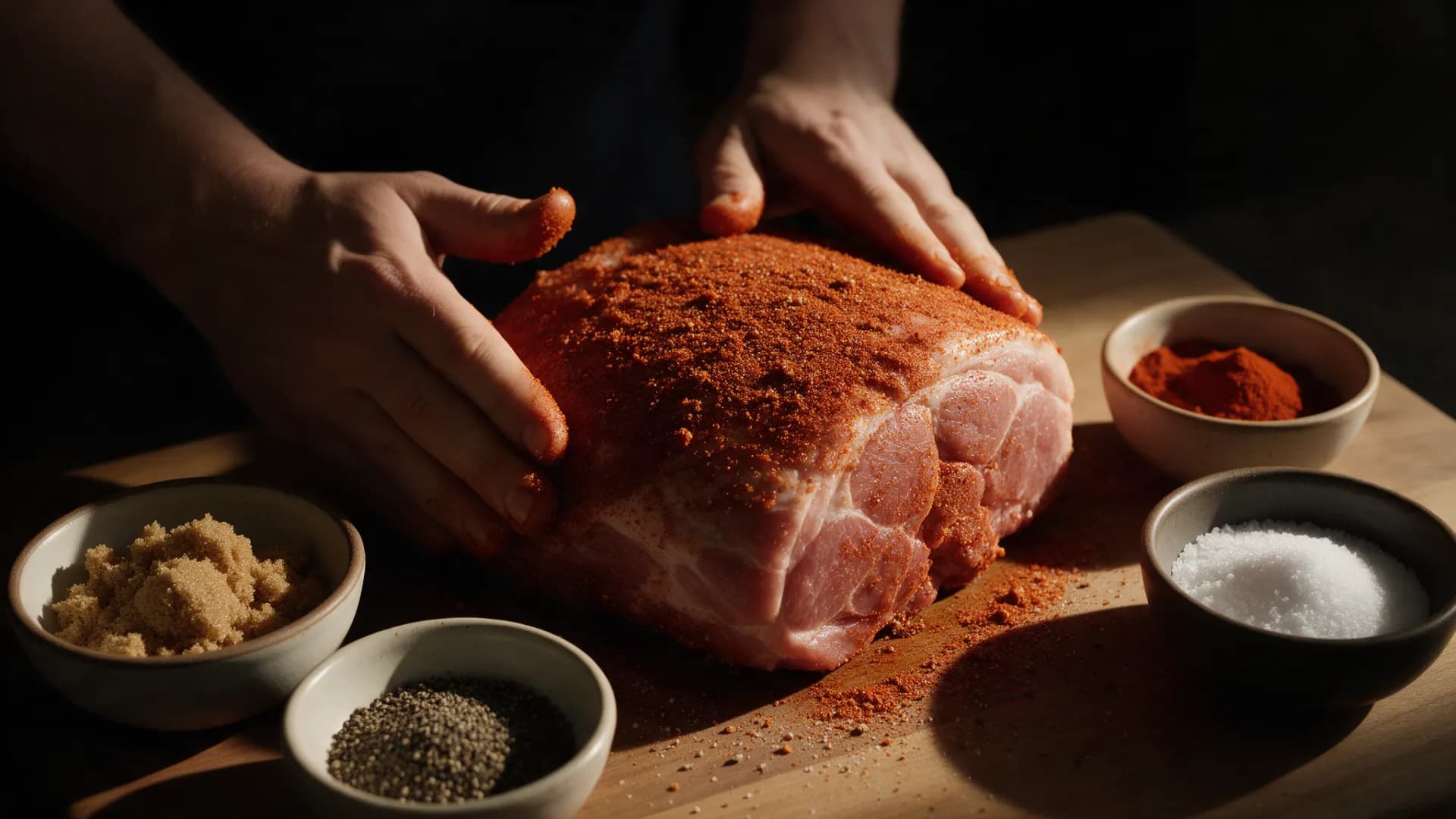
Australian cooks get caught out on the name. Here a brisket point end is the whole brisket, both muscles, the thing US recipes call a packer. The point on its own, the thick fatty muscle on top, is AUS-MEAT's point end plate (code 2327). So if you ask for "the point" you'll probably walk out with the whole lot.
That's fine though, because you want the flat as well. Buy a point end, cook it whole, and cut the point off part way through. If your butcher will sell you a point end plate on its own, that works too. Be careful with "deckle", which some US recipes use for the point. On Australian specs "point end deckle off" (2350–2353) is still the whole brisket, just with the hard inside fat taken off, so asking for "the deckle" can go either way.
Why the point?
The point is the fattier, juicier muscle. In a 2024 study by Johnston and colleagues the cooked point was 10.9% fat against the flat's 6.9%, and scored 66.9 for juiciness against 46.3. A 2024 Australian study by Lees and colleagues found the same thing in Australian point ends, with Australian and US eaters both.
That matters because burnt ends cook the meat twice. In a 2025 Texas A&M study, holding whole briskets hot for 3 hours cost yield, and the point got much less cohesive and released less juice. The second cook in a sauced pan is a hot hold of a similar kind, so it costs you something too. But after 3 hours at 90°C the flat got tougher and the point didn't. The point has the fat to spend, which is why it's the one you cube (why is my brisket dry?).
Separate it at the wrap
The point usually finishes before the flat. On one of my logged briskets the flat lagged behind in the pit and the point ran ahead, so if you leave the two muscles joined, one of them comes off at the wrong time.
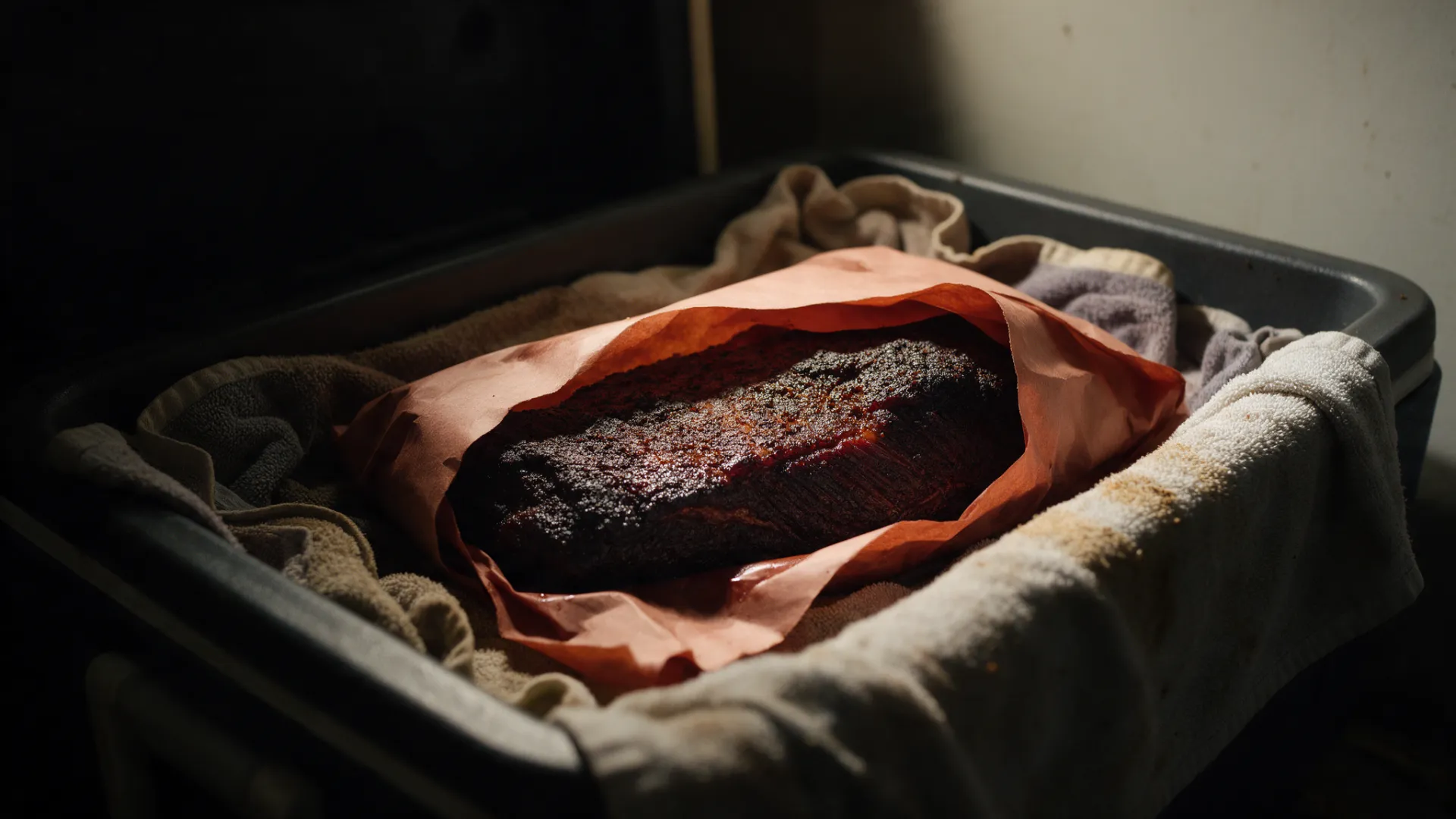
I run brisket at 121°C until the wrap and then 135°C. I usually render the fat trimmings on the smoker all the way to the point of wrap. Then I pour the warm tallow over the brisket as I wrap in butcher paper. Recipes that split it at the wrap do it at about 74°C. Find the seam of fat between the two muscles and run your knife along it. Wrap the flat and the point and put them back on. Plenty of recipes separate it raw, or wait until the whole brisket's done, and both work.
I haven't logged burnt ends from a point yet, so the times here come from other cooks' recipes. When the point probes tender, take it off. Some cooks have it around 82–88°C (180–190°F) by then, but go by the probe sliding in (where to put the probe).
Why cube it?
Every cube gets crust on all its faces. Cut a point into 2.5 cm cubes and you get roughly four to five times the surface of the whole piece, going by a simple slab worked out on paper. Go to 4 cm cubes and it's about three times. Smaller cubes are more crust and less soft middle, and bigger ones are the other way. Some recipes use 2.5 cm and others 4 cm.
One piece
Cut into 2.5 cm cubes
- The whole piece: 1,540 cm² of surface
- 2.5 cm cubes: 192 cubes, 7,200 cm² of surface, 4.7× the whole piece
- 4 cm cubes (worked at 3.8 cm, 1½ in): 55 cubes, 4,737 cm² of surface, 3.1× the whole piece
Worked on paper on an idealised 25 × 20 × 6 cm slab, not measured. Real points are wedge-shaped. Red lines: the cuts.
It's the corner piece of the lasagne. Everyone wants the edge with the crunchy bits, and burnt ends cut the whole point up so every piece is an edge.
The second cook
Put the cubes in a tray in one layer and toss them with sauce, a little honey or brown sugar and a knob of butter. There's no set amount in grams, so just coat them. Then it goes back on the pit uncovered.
While the pan's wet it can't get past 100°C, so the sauce can't burn. As the water cooks off, the sauce thickens and sets onto the cubes. They're done when the cubes are tender and the sauce has gone tacky and dark and stays put, usually somewhere in the 1–2 hours most recipes give it. Don't let it run long. Hot holds cost juice, and the cubes don't need much more cooking. Keep the tray off direct flame too. A dry pan of sugar over fire goes from glossy to burnt in minutes (sugar in a rub).
Where the name comes from
The name comes from Kansas City. In April 1972 Calvin Trillin wrote in Playboy that the best thing at Arthur Bryant's was given away free: "the burned edges of the brisket". The counterman pushed them to the side and anyone who wanted them helped himself. Down the road, Snead's cut the burned edges off with a bit more meat attached and sold them as brownies.
Those were the crusty edges of whole briskets. There were no cubes, no sauce and no second cook in the story. Trillin remembered years later that the trimmings came from the point. Nobody has written down who first cubed a whole point and cooked it again. Doug Worgul, a Kansas City barbecue writer, thinks it came out of competition barbecue, though he calls that a theory. So nobody can really say they were invented at Arthur Bryant's.
Making them the next day
Same day is easiest, but you don't have to. Plenty of cooks do the brisket one day and the burnt ends the next. Cook the point till tender, let it stop steaming, then put it in the fridge in a shallow container. Next day cube it, sauce it and give it the second cook, making sure the cubes get hot right through.
Quick answers
Can I make burnt ends the next day?
Yes. Cook the point until tender, cool it, and put it in the fridge in a shallow container once it stops steaming. The next day, cube it, sauce it and give it the second cook, making sure the cubes get to 75°C. Treat it like any leftover: eat it within two to three days, and reheat it only once.
What part of the brisket are burnt ends from?
The point, the thick, fatty muscle that sits on top of the flat. In Australia a "brisket point end" is the whole brisket, both muscles, and the point on its own is called the point end plate. The point is fattier and juicier than the flat, which is why it can take the extra cooking burnt ends need.
Are burnt ends actually burnt?
No. The dark crust is bark and set sauce, not char. The name comes from Kansas City, where in the early 1970s Arthur Bryant's gave away the crusty, blackened edges of its briskets. Modern burnt ends are cubes of point cooked a second time in sauce. If yours taste bitter, the sauce went over too much direct heat.
Should I separate the point from the flat?
It helps. The fattier point usually finishes before the flat, so separating them lets each come off when it's ready. Cooks do it raw, at the wrap or once the flat is pulled, and all of them work. Cut along the seam of fat between the two muscles, then cube the point once it's tender.
For the curious
The cut codes are from AUS-MEAT's cut code reference (2023) and MLA's MSA guide to beef subprimals (2021). The point is pectoralis superficialis, the flat pectoralis profundus. The point and flat results are from Johnston et al. in Meat and Muscle Biology (2024) and Lees et al. 2024, and the hold results from Kerth, Wall and Grayson-Holter in Meat and Muscle Biology (2025), which measured cohesiveness and shear force. The quote is from Calvin Trillin's Kansas City piece in Playboy, April 1972, p.208. Trillin's later memory and Doug Worgul's theory are in Feast Magazine, 2020. The surface figure is our own sum on an idealised 25 × 20 × 6 cm slab. The food-safety numbers follow FSANZ and Food Safety Information Council guidance, checked 26 October 2026.
If you're between Rockhampton and Bundaberg and would rather someone else looked after the pit at your next event, that's what I do. Get a rough price →