

Does injecting work?
By Tim · 28 October 2026 · 10 min read
On steaks and roasts, yes. Meat injected with salt and phosphate is reliably rated juicier and more tender, and it's the salt and phosphate doing the work. Nobody has tested a smoked brisket though. Injecting very likely seasons the middle but it won't fix overcooking. And once a needle's gone in, cook the centre to 75°C (167°F).
On this page · 11 sections
Dry brine overnight
Salt from outside creeps in slowly, about half a centimetre.
Injected
A needle puts it in the middle at once. Overnight it spreads a few millimetres from each track, faster as it warms.
Amber is the salt. Ink lines on the right are needle tracks. Roughly drawn, and the meat’s thickness isn’t to scale.
Why inject at all?
Because salt on the outside is slow. A dry brine only gets about half a centimetre into a brisket overnight in the fridge (dry brining). It never reaches the middle of a thick cut before you cook it.
A needle skips the wait. It puts salty liquid centimetres deep straight away, and from there it spreads out from each needle track. Overnight in the fridge that spreading is only a few millimetres, and it goes a lot faster once the meat warms up on the smoker.
The meat industry does this on a big scale and calls it enhancing. Beef and pork get pumped with water, salt and phosphate, usually to about 7–15% extra weight. Which is where nearly all the research comes from.
What the research found
Study after study, consumers and trained tasters rate enhanced beef juicier and more tender than the same meat left alone. These are mostly US university labs, and mostly steaks and roasts.
One flank steak study from 2019 (Morrow and colleagues) is a good example. On a 100-point scale, injecting took juiciness from about 51 to 68, tenderness from about 46 to 67, and overall liking from 48 to 70. That's one study on a lean, thin cut cooked to 72°C (162°F), but it's a big jump.
Consumer scores, out of 100
Juiciness
Plain51Injected68Tenderness
Plain46Injected67Overall liking
Plain48Injected70
Weight lost in cooking, %
Weight lost in cooking
Plain26%Injected25%
No real difference in cook loss: the injected steaks finished wetter mostly because they started wetter.
Every bar is drawn on the same 0–100 scale.
There's an Australian one too. Garmyn and colleagues in 2020 looked at Australian grass-fed and grain-fed beef, with and without a 7% pump. Enhancing lifted the grass-fed steaks to roughly the eating quality of plain grain-fed.
And it helps a bit when steaks are overcooked. In Vote's study, enhanced strip steaks stayed juicier than plain ones at 77°C (171°F). But in another, even enhanced steaks lost juiciness going from 77°C to 82°C (180°F), and those researchers (Drey and colleagues, 2019) stopped short of calling it insurance.
Is it the liquid or the salt?
The salt and phosphate. In the 2000 strip loin study by Vote and colleagues, phosphate on its own didn't help and tended to taste soapy and sour. Other studies found salt on its own wasn't as good as salt and phosphate together. Together they work best.
Salt loosens and partly dissolves the proteins that make up the muscle fibres, so the fibres swell and hold on to water when they're heated instead of squeezing it out. That's the same thing a dry brine does in the outer layer. Phosphate helps by nudging the meat a bit less acidic (Morrow measured it going from 5.8 to 6.2 on the pH scale) and working alongside the salt.
The amounts are small. Commercial enhancement ends up at about 0.3–0.5% salt and 0.25–0.4% phosphate in the raw meat, and US rules cap phosphate at 0.5%. Which is actually less salt than a normal dry brine at 0.5–1%.
Not all the liquid stays either. Some runs straight back out of the needle holes. In Morrow's study about 2–3% of the meat's weight drained out in 20 minutes, and above about 12% extra weight the leaking gets worse. Then in the oven the injected and plain flank steaks lost about the same share of their weight, 25% and 26%. The injected ones finished wetter mostly because they started wetter and held it a bit better. Other studies vary on that, and some did lose less.
What about brisket?
That's the gap. Nobody has published a test of injecting a smoked brisket. Every enhancement study cooks steaks or roasts to somewhere between 66 and 82°C (151–180°F), and they're done in an hour or two. A brisket goes to 90–95°C (194–203°F) over six to fifteen hours.
Brisket also loses a lot. In a 2025 Texas A&M study yields ran from about 73% down to 56%, so the cook took out 27–44% of the weight. You pump in about 100 mL a kilo and the cook takes out 300 to 450 g. Whether the injection changes that loss on a brisket, nobody knows.
What it very likely does carry through is the seasoning. Salt that's already in the middle stays in the middle.
My own injected briskets don't settle it. I injected a 2.1 kg flat-dominant brisket in July, 10 hours before it went on the Hark. It was 100 mL beef stock, 2 tablespoons each of maple syrup, light soy and Worcestershire, and a tablespoon each of onion and garlic powder, and I used most of it. I pulled it at 94.1°C (201°F) and it was the driest brisket I've logged, 2 out of 5 for moisture, and everyone said dry. The hold is the main suspect. It sat at about 72°C (162°F) for over two hours (resting and holding a brisket). Still, injecting didn't save it.
The February birthday packer I injected the night before (stock, soy, Worcestershire, maple, powders and melted butter) came out nice and soft, 4 out of 5 overall. And my best-scored brisket, the July 2025 baseline, wasn't injected at all. So many other things changed between those cooks that none of them tells you what the injection did.
What should go in it?
Salt does most of the work, so start simple. A well-seasoned beef stock, and maybe some soy sauce or Worcestershire, which bring salt as well as flavour. Soy sauce is about 5.5% sodium by weight and Worcestershire about 1.3%, going by US data. Australian brands vary. A salt-free injection is mostly just a flavour injection.
The competition tubs add phosphate, and that's what the research says works best with salt. I'm not giving a dose here. Get it wrong and it tastes soapy.
Go easy on garlic, onion and pepper. Inside the meat they can make the whole thing taste of marinade instead of beef, and powders clog the needle. People inject butter or fat too, but I couldn't find anyone who's measured whether it makes brisket juicier.
How much, and when?
The research range is about 7 to 15% of the meat's weight, and most trials sit between 7 and 12%. That's roughly 70 to 120 mL per kilo. Over about 12% it tends to leak back out, and you'll get a puddle on the tray whatever you do.
The usual way is a grid a couple of centimetres apart, pushing the plunger slowly as you draw the needle out. That's common practice and nobody has tested the spacing. Same for timing. Some say 30 minutes before, some say overnight, and no study compares them. Longer gives the salt time to spread from each track. A lot of the spreading happens on the smoker anyway. I've done mine the night before or 10 hours ahead.
The food-safety rule that changes
A whole steak or roast only has germs on the outside. That's why it can be eaten pink. Push a needle through and some of those surface germs go in with it. In the industry studies about 4–8% of what was on the surface ended up inside.
So the Food Safety Information Council treats injected or "moisture-enhanced" meat like mince or a rolled roast. The centre of the thickest part has to reach 75°C (167°F). A finished brisket or pulled pork is well past that. Where it bites is injected lamb, a roast, or anything else you'd normally pull earlier, and a probe sitting near the edge instead of the middle (where to put the probe).
The US does it differently. Since 2016, injected or needle-tenderised beef there has to carry tested cooking instructions on the label, often a lower temperature held for a few minutes. In Australia it's the simpler 75°C.
At your pit next time
- Decide what you want from it. Injecting very likely seasons the middle. It won't fix a bad hold or an overcooked brisket.
- Keep it simple, with a well-seasoned stock plus soy or Worcestershire.
- Aim for about 70 to 100 mL per kilo and weigh what goes in.
- Inject slowly on a tray in a grid and expect some to run out.
- Fridge until it goes on, and bin the leftovers.
- Probe the centre of the thickest part, at least 75°C, on anything injected.
Quick answers
Does injecting brisket make it juicier?
Probably a little, but nobody has tested it on brisket. Meat-science studies on steaks and roasts injected with salt and phosphate found them reliably juicier and more tender. Those were cooked to 66–82°C (151–180°F), though, not the 90–95°C (194–203°F) and many hours a brisket gets. Injection mainly carries salt into the middle. It won't rescue a brisket that's overcooked or held too hot.
Is injected meat safe to eat pink?
Not in Australia. A whole steak only carries germs on its surface, which is why it can be served pink. A needle pushes some of those surface germs inside, roughly 4–8% of them in industry studies. So Australian food-safety advice treats injected, marinated or "moisture-enhanced" meat like mince: cook it until the centre of the thickest part reaches 75°C (167°F).
What should I put in a brisket injection?
Salt does most of the work, so start simple: a well-seasoned beef stock, maybe some soy sauce or Worcestershire, which carry salt as well as flavour. Competition products add phosphate, which the research shows works best alongside salt. Go easy on garlic, onion and pepper. Inside the meat they can make it taste of marinade, and powders clog the needle.
How much injection per kilo of brisket?
The meat industry adds about 7 to 15% of the meat's weight, and research trials mostly sit between 7 and 12%. That's 70 to 120 mL per kilo. More than about 12% tends to leak straight back out. Expect a puddle on the tray either way: in one study about 2–3% of the weight drained out within 20 minutes.
Should I inject the night before or just before cooking?
Either works, and there's no study that compares them. Injected salt spreads from each needle track only a few millimetres overnight in the fridge, and much faster once the meat warms up on the smoker. Longer gives a more even result. Whichever you choose, keep the injected meat in the fridge until it goes on, and throw out any leftover injection.
Read next
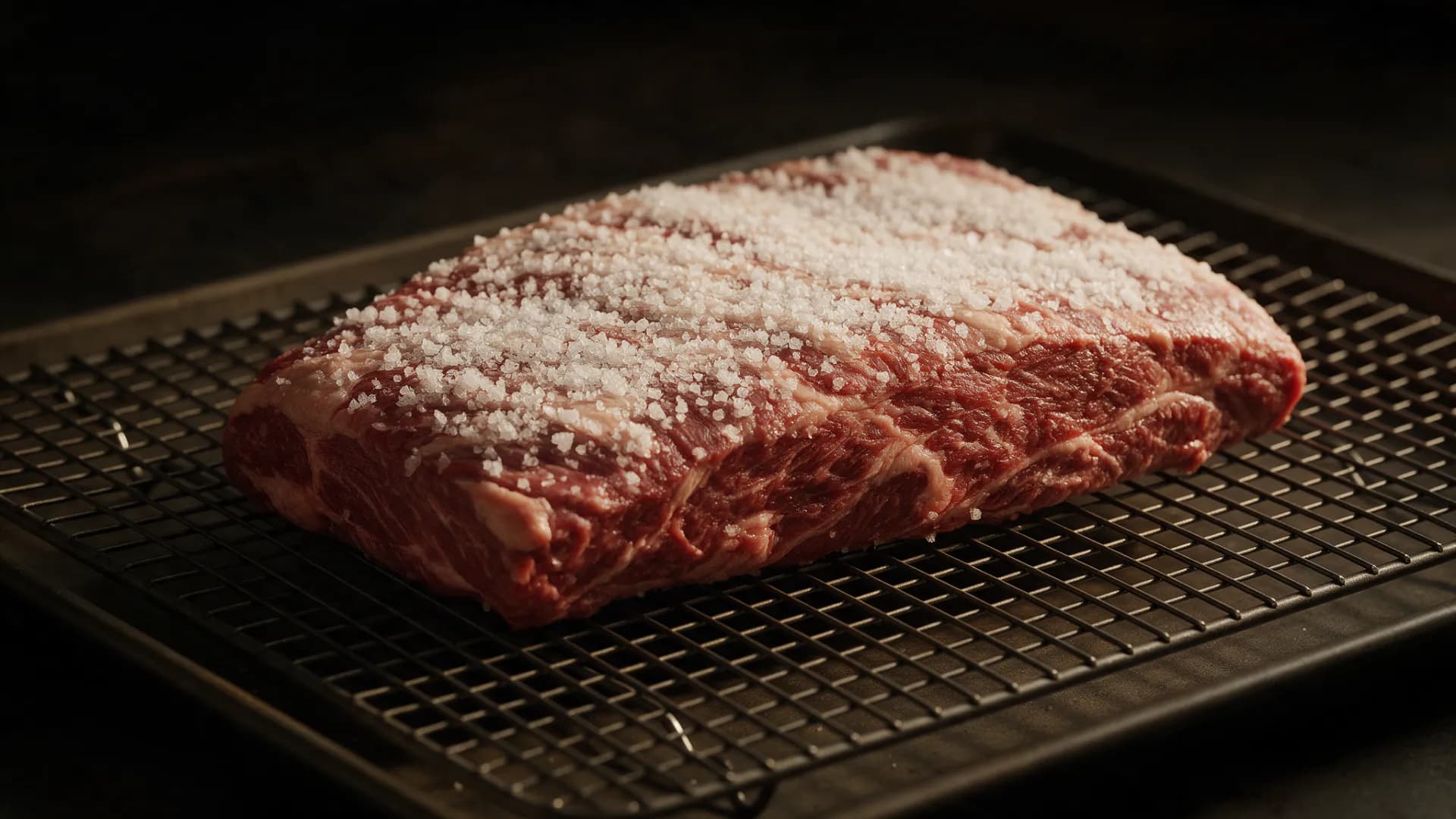 Dry brininghow far salt gets from the outside, and why it's slow.
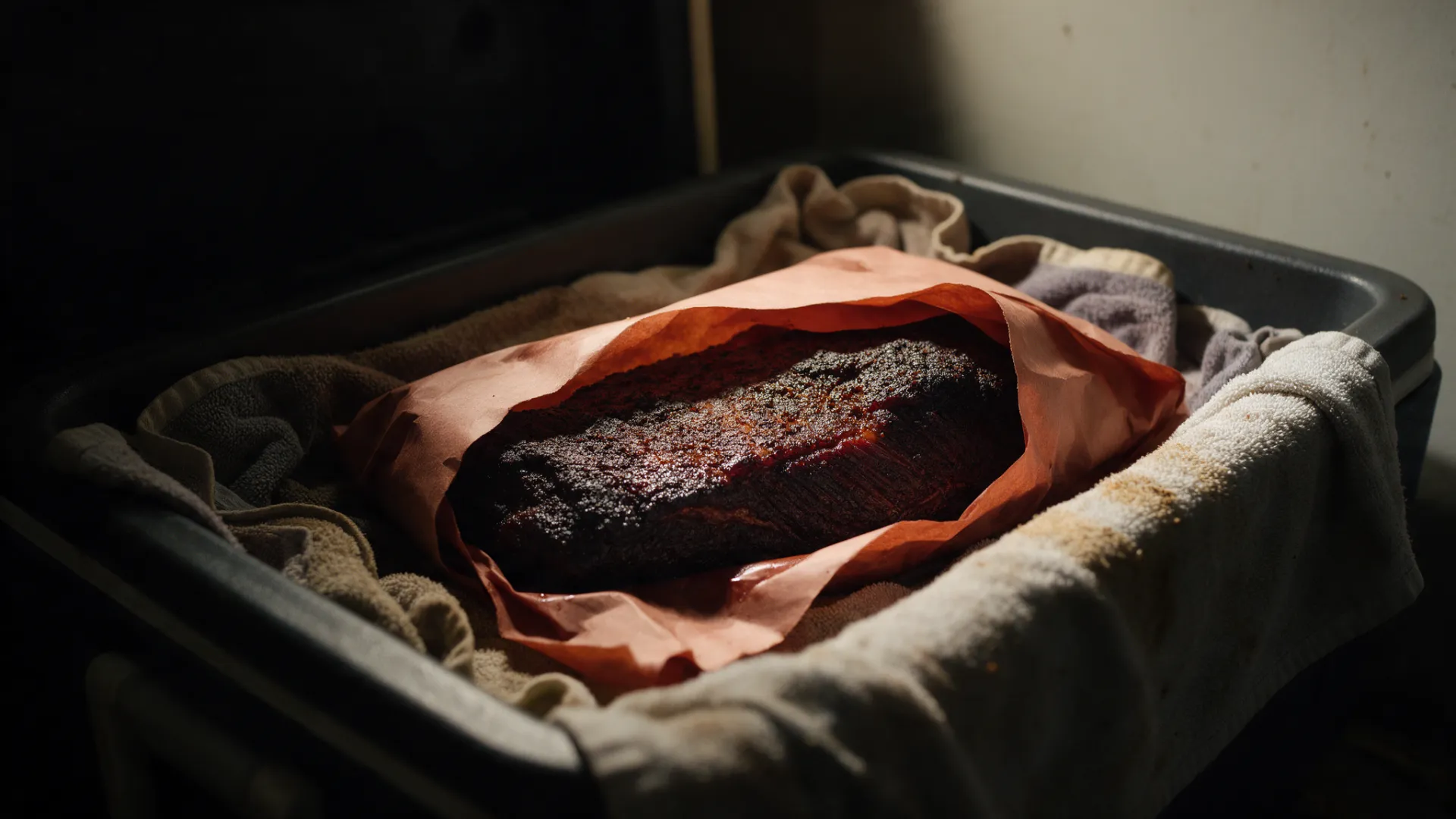 Resting and holding a brisketthe hold that dried my injected flat.
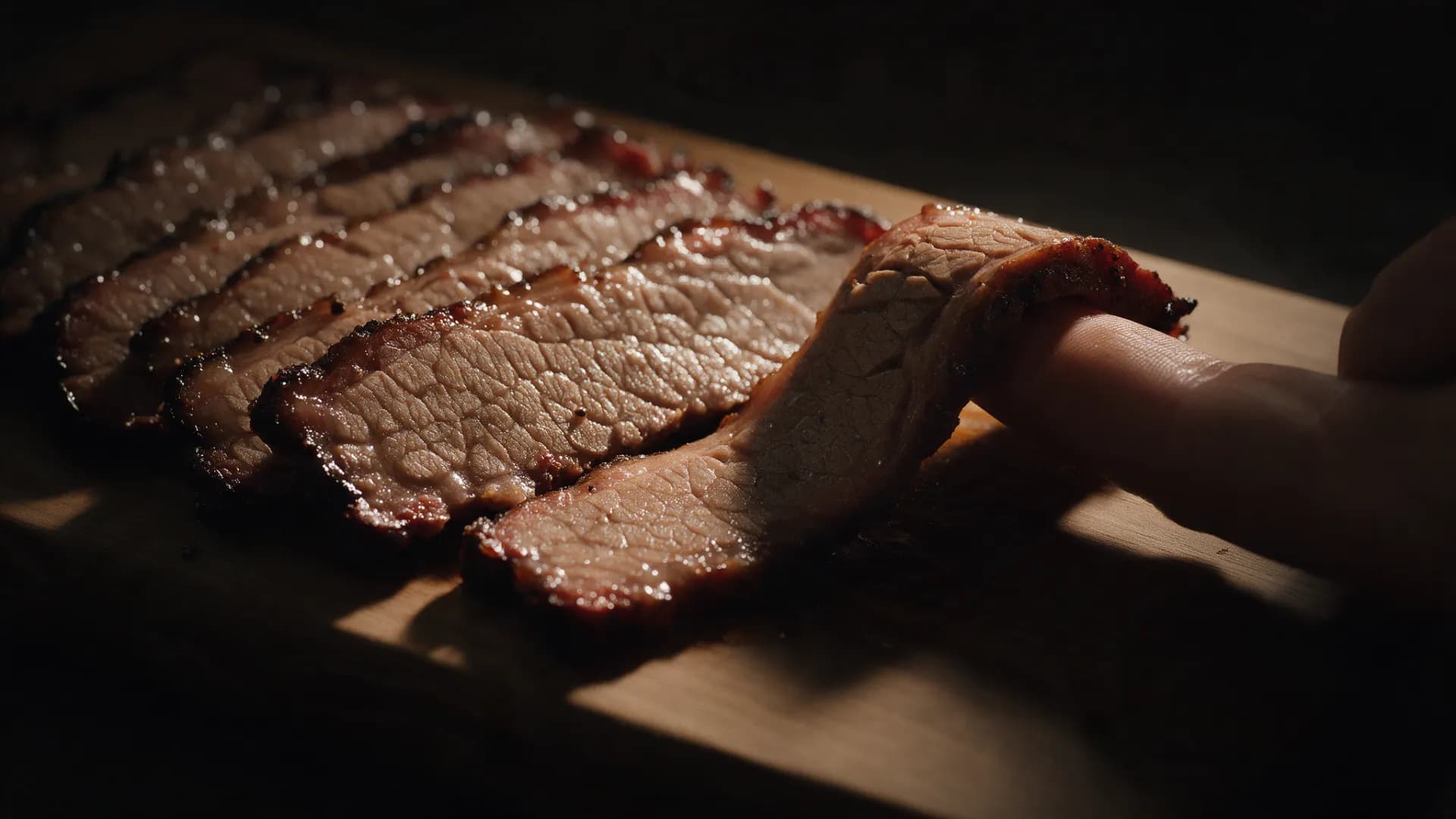 Why is my brisket dry?working out what went wrong from the slice.
For the curious
The industry word is enhancement or moisture-enhanced meat, and the "pump" is the extra weight as a percentage. The usual phosphate is sodium tripolyphosphate, which raises pH and works with salt to increase water-holding capacity. Salt does it by swelling the myofibrils. The key studies are Vote et al. 2000 (strip loins, phosphate alone failed), Morrow et al. 2019 (flank, drip and cook loss), Drey et al. 2019 (doneness), and Garmyn et al. 2020 (Australian beef). Brisket yields are from Kerth et al. 2025, and those briskets weren't injected. Germs carried inside by needles is translocation (Heller et al. 2005). The 75°C rule is the Food Safety Information Council's meat thermometers page, and the US approach is the FSIS 2015 rule. Food additives in Australia, phosphate included, are covered by Schedules 15 and 16 of the Food Standards Code. Sauce sodium is from USDA FoodData Central.
If you're between Rockhampton and Bundaberg and would rather someone else did the injecting and the probing for your next event, that's what I do. Get a rough price →