Smoked chicken without rubbery skin
By Tim · 28 October 2026 · 9 min read
Smoked chicken skin goes rubbery because a smoker at 121–135°C can't dry it before the breast is cooked. So salt the bird and dry it uncovered in the fridge overnight, smoke it while the skin's still damp, then finish it in a grill or oven at 200–240°C. The breast is done at 75°C, measured.
On this page · 9 sections
Why does smoked chicken skin go rubbery?
Chicken skin is about half water and a third or more fat. To go crisp most of that water has to leave and some of the fat has to melt out, and a smoker is slow at both. While the skin is wet it's sweating, and the sweat keeps it well below the pit temperature, same as a brisket in the stall (why your brisket stops climbing).
Humid air slows the drying down even more. Greg Blonder tested this on chicken breasts in 2011 and found humidity changed the cook below about 121°C, but at 177°C it made no difference at all. Smoker air is often humid, and a smoker runs at or near that low end.
So at 121–135°C the breast gets to 75°C in a couple of hours and the skin is still wet. Hot, wet skin goes soft and a bit gelatinous. That's the rubber. Even skin off an ordinary roast chicken is still about 40% water, which tells you how much has to go before it crunches.
In the smoker
121–135°C
250–275°F
Wet skin is held cool
The hot finish
200–240°C
392–464°F
Fat runs out, skin dries
Red: heat from the pit air. Amber: water leaving the skin. Dashed: the fat under the skin. Circles: fat running out.
The fat has to come out too
Most advice leads with moisture. Though on my farm birds I think the fat was the bigger problem.
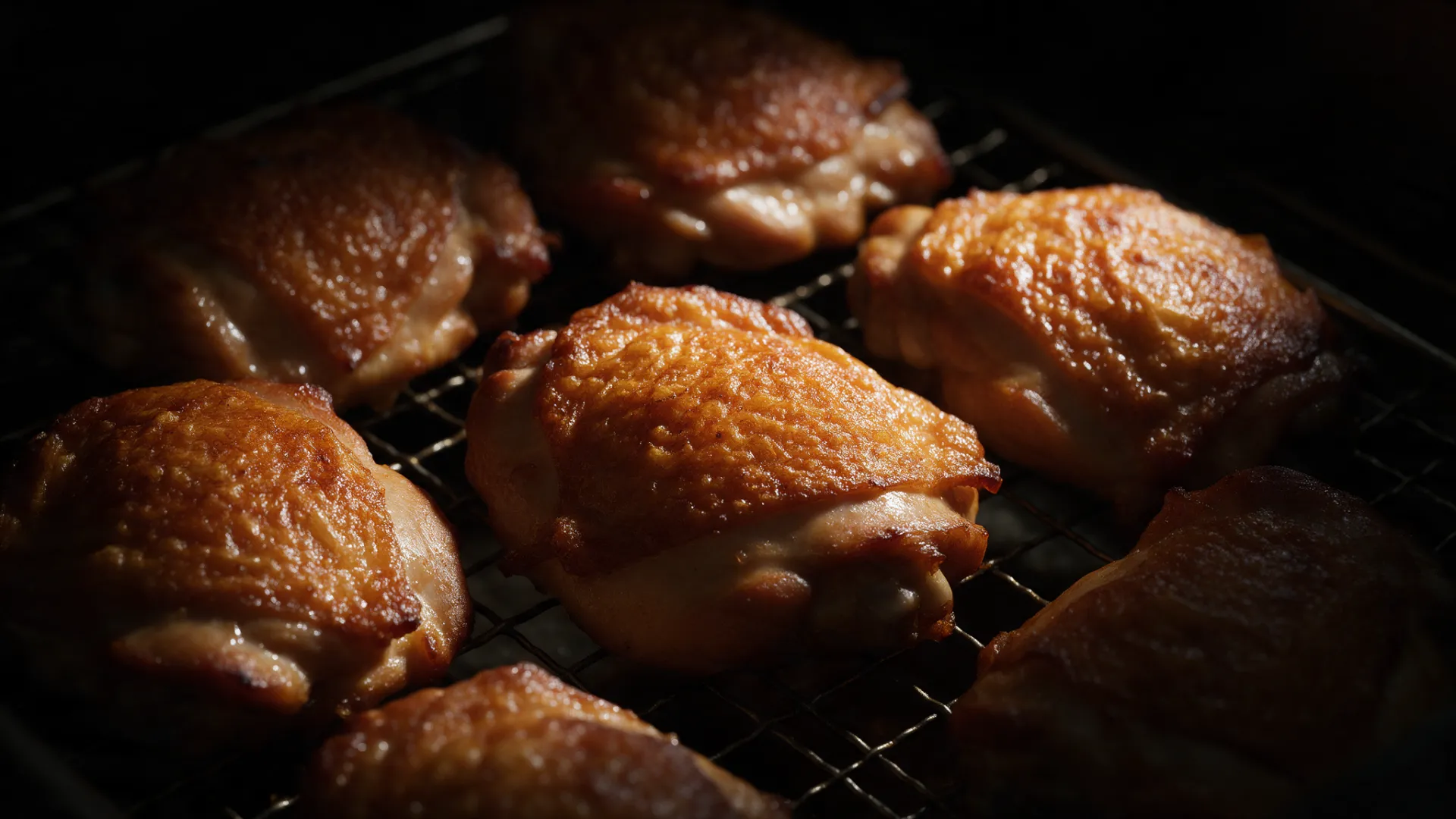
I've done two chickens from the same farm on the gas Weber Q, no wood on either, so this is a roast and not a smoke. One I remember salting uncovered for 22 hours, and the skin still came out a bit leathery. The one I logged properly was a 4.4 kg meat hen that only got 6.5 hours of salt. I ran it at 165–167°C at the grate and only cranked it to 240°C for the last 13 minutes or so. The skin came out crisp with a little crackle. At 61°C, before the blast, it was already dry and taut with the fat rendered onto the tray.
So on a fatty bird I reckon the fat matters more than the drying time. It's like bacon in a cold pan. Let the fat run out first and then it crisps. That's one pair of cooks on farm meat hens though. A supermarket chook is a lot smaller and I'd guess it carries less fat under the skin, but both jobs still need doing, the fat out and the water out.
Dry it the day before
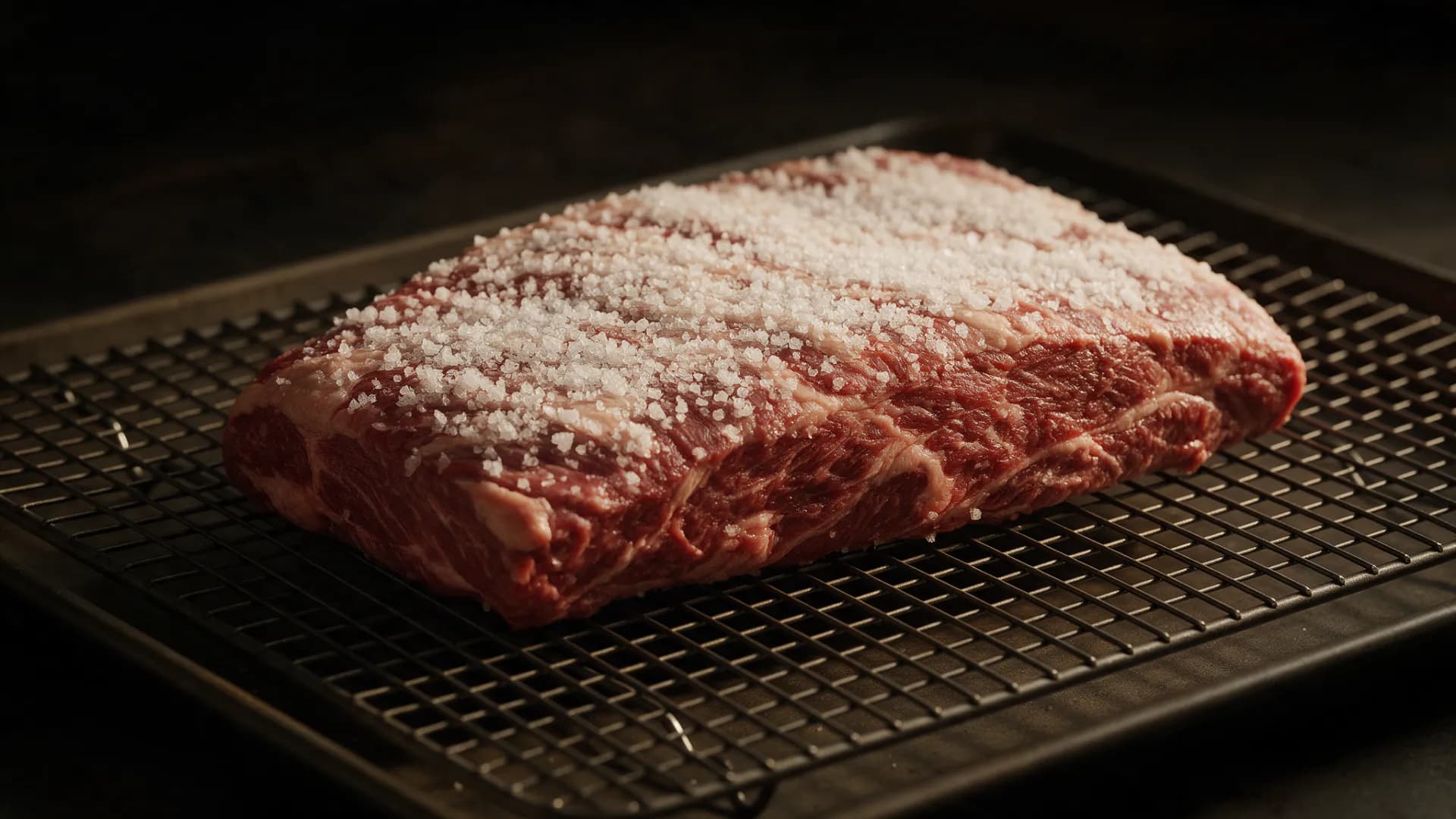
Salt it at about 1% of the bird's weight. Mine was 44 g on the 4.4 kg hen. A 1.6 kg bird is 16 g. Weigh it, because a spoonful of one salt can weigh a lot more than another (dry brining). Salt both sides and under the breast skin, then put it on a rack in the fridge, uncovered. Overnight is good. Mine got 6.5 hours.
Butterfly it too. Cut the backbone out and press it flat, so all the skin's on top and the breast and legs cook more evenly. In an Australian shop "spatchcock" can mean a small young bird as well as the butterfly cut, so if you want a normal chook flattened, ask for it butterflied.
Don't wash it. It spreads germs round the sink and doesn't make the chicken any safer. Even so, about half of Australians who cook whole chickens still wash them, going by a 2025 survey.
Smoke first, crisp last
Smoke sticks best to a cool, damp surface. So the bird takes most of its smoke early, while the skin's wet anyway, and you don't have to pick between smoky and crisp. You just have to do them in the right order. I haven't logged a smoked chicken yet, so this half leans on other cooks, but they mostly land in the same place: smoke it low, then finish hot.
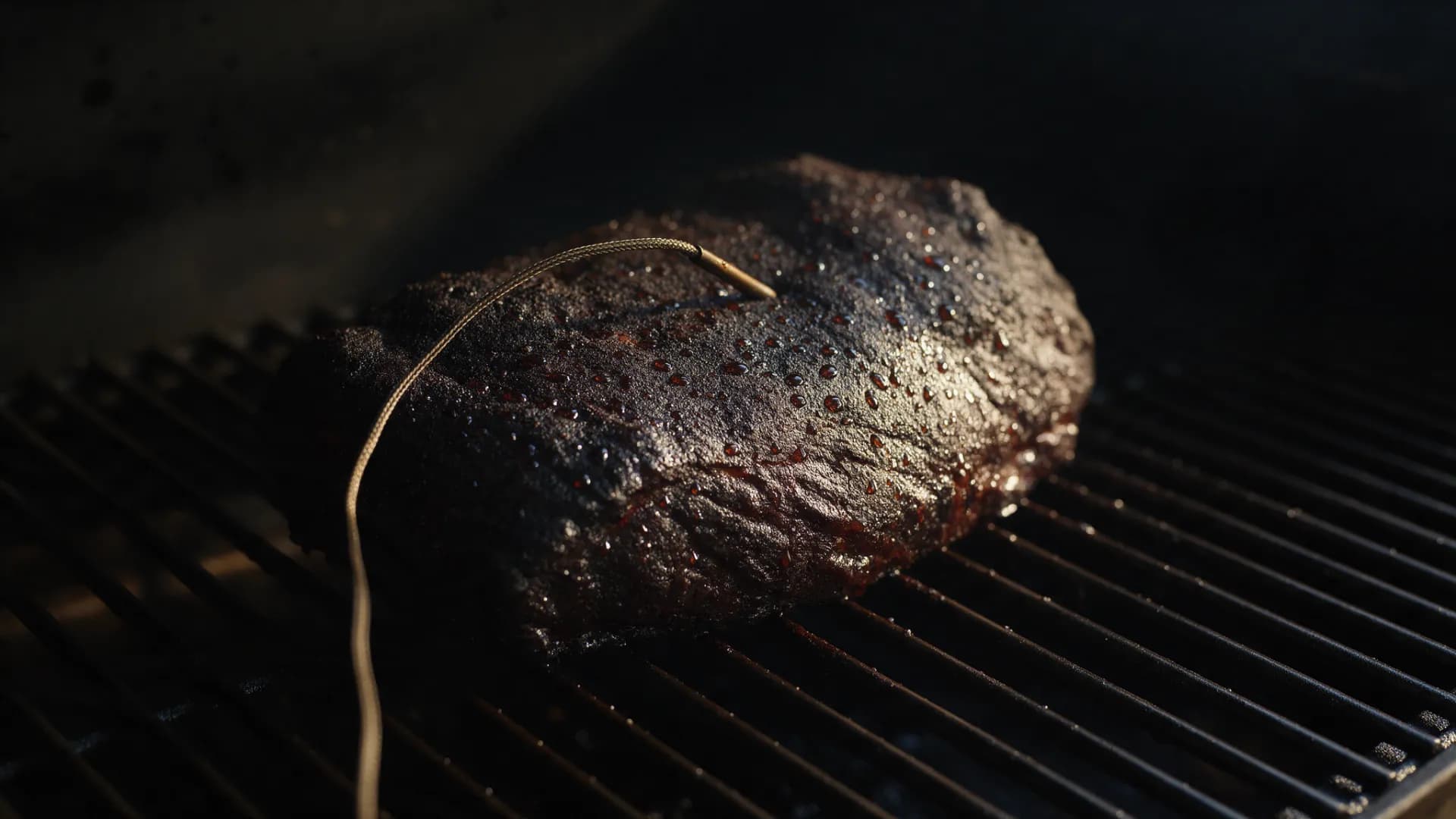
Run the smoker at 121–135°C with the water pan out. I leave the pan in for every meat except chicken, because humidity is the enemy of skin. No foil and no spritz either (to spritz or not). Keep sauce off the skin as well. It softens it, and any sugar in it burns at finishing heat. Put the sauce on the table instead.
When the thickest part of the breast reads about 65°C, it's time to move it. That's where I cranked the heat on the gas bird.
The hot finish
"An offset at 120–145°C will not crisp it." I wrote that before the gas bird.
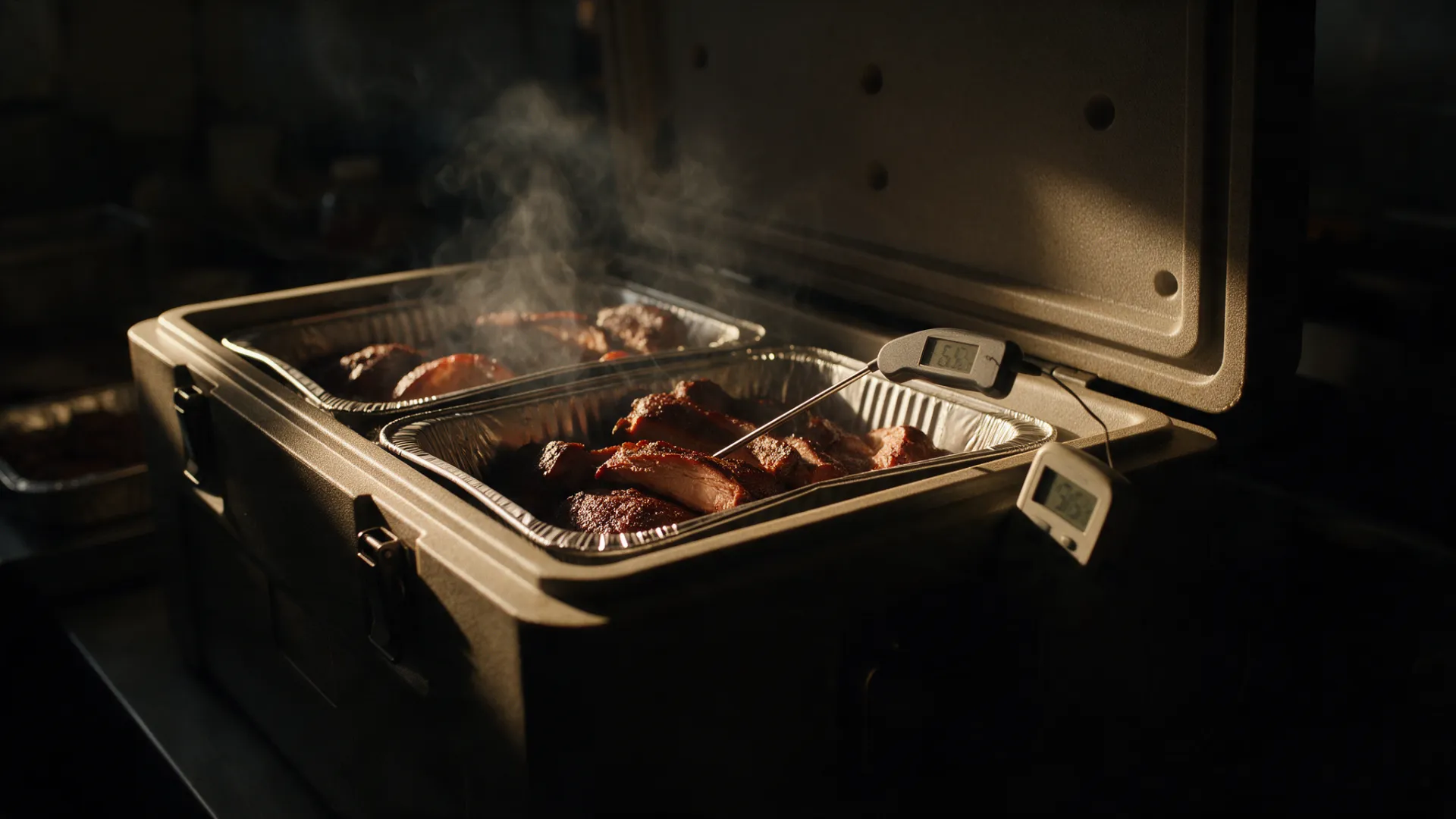
Move the bird to a grill or the oven at 200–240°C. My gas bird did its last 13 minutes or so at 240°C. If your smoker can run up around 163°C or hotter, some cooks just crank it there instead and keep it on the one cooker. Leave it until the skin's crisp all over and the breast reads 75°C. Then don't rest it under foil, because the steam softens the skin straight back up.
When is smoked chicken done?
At 75°C (167°F) in the thickest part of the breast, away from the bone. That's the Australian number for all poultry. US recipes say 165°F (74°C), so don't take a US pull number as gospel (where to put the probe).
The legs are safe at the same number but they eat better hotter. On my gas bird the thighs were 80–90°C and they were done. The drumstick meat was juicy but the tendons clung to the bone. Juicy and tough in one spot is connective tissue, so my fix for next time is to take the leg quarters off and give them 10–15 minutes more while the breast rests, aiming for about 88–92°C in the drumstick.
The thigh was red at the frame on that bird too. That's pigment from the bone in a young bird and it's safe. Smoke can turn chicken meat pink as well (the smoke ring). Go by the thermometer.
Quick answers
Why is my smoked chicken skin rubbery?
Because a smoker at its usual 121–135°C can't dry the skin before the meat is cooked. Chicken skin is about half water and a third fat. While it's wet, evaporation keeps it cool, and humid smoker air slows the drying further. The breast gets to 75°C with the skin still soft. Dry the skin overnight first, then finish the bird hot and dry.
Can smoked chicken be smoky and have crisp skin?
Yes, if you do it in order. Smoke sticks best to a cool, damp surface, so the chicken takes its smoke early while the skin is still wet. Then turn the heat right up, or move it to a hot grill or oven, to render the fat and dry the skin. You can have both. You just can't do both at once.
Is rubbery skin just a pellet smoker problem?
No. Any cooker running low and humid gives soft chicken skin, whether it's an offset, a bullet or an electric. What matters is the heat and the moisture. Humidity slows drying most below about 121°C and made no difference at 177°C in Greg Blonder's tests. So the fix is the same on every cooker: water pan out, dry skin, hot finish.
What temperature is smoked chicken done in Australia?
75°C in the thickest part of the breast, measured with a thermometer. US recipes say 165°F (74°C), but Australian guidance is 75°C for all poultry. Thighs and drumsticks are safe at the same number and eat better cooked further, around 80–90°C. Pink meat or dark bones don't mean it's raw. Smoke and young bones can cause both.
For the curious
Skin composition is from USDA FoodData Central: raw broiler skin (54.2% water, 32.4% fat) and roasted skin (40.3% water). Harold McGee's On Food and Cooking (2004, p.160) gives bird skin as about 50% water and 40% fat. A wet surface sits near the air's wet-bulb temperature while it evaporates. Greg Blonder's chicken breast humidity tests and smoke deposition experiments are on his site. Xu and colleagues (Food Chemistry, 2025) followed heated skin collagen into a gelatin network. Ajandouz and Puigserver (1999) showed pH changes Maillard browning. Belk et al. (mSystems, 2021) compared air and water chilling. The baking powder and air-chilled tips are from America's Test Kitchen. The washing survey is the Food Safety Information Council's, and the dark-bone note is USDA FSIS. Food-safety numbers follow FSANZ and Queensland guidance, checked 26 October 2026.
If you're between Rockhampton and Bundaberg and would rather someone else looked after the pit at your next event, that's what I do. Get a rough price →