Smoked lamb shoulder
By Tim · 28 October 2026 · 9 min read
Buy a bone-in lamb shoulder (the oyster cut), trim the outside fat thin and salt it ahead. Smoke it unwrapped until the bark sets, then seal it in a foil tray with a cup of stock. Pull it when it probes soft everywhere, about 93–96°C, and serve it hot, because lamb fat sets fast.
On this page · 11 sections
Which shoulder to buy
Australian butchers cut the shoulder a few ways. There's the square cut, a big flat piece of about five ribs that often ends up as chops. There's the oyster cut, with the blade bone and the shank left in. And there's boned, rolled and netted, which has all the bones out and is tied up into a roll. You'll also see banjo, which is an oyster cut trimmed oval, and easy carve.
For the smoker a bone-in oyster cut is the easy one. It's compact, it holds its shape, and it's what most smoker recipes are written for. Around 1.5–2 kg is a good size.
A rolled shoulder works too, but cook it right through. When it was rolled, the outside got folded into the middle, so Australian guidance wants the centre at 75°C (167°F). A pulled shoulder ends up well past that anyway. Just don't serve rolled lamb pink.
Lamb, hogget or mutton?
Lamb has a legal meaning here. It's under 12 months old or has no permanent incisors in wear. Hogget has one or two, mutton more. As sheep get older the connective tissue toughens up, the flavour in the fat gets stronger and the meat goes darker.
Lamb
Under 12 months old or no permanent incisors in wear
Hogget
One or two permanent incisors in wear
Mutton
More permanent incisors in wear
Cream: milk teeth. Red: permanent incisors in wear. Lower front teeth, drawn, not to scale.
In Australian taste tests of oven-roasted and grilled cuts, lamb and yearling meat scored well ahead of mutton, about 60 against 40 out of 100 for a roast forequarter. Those tests didn't include a long, wet cook. Older meat has more connective tissue and it takes longer to soften, so long and moist is the way to cook it (why low and slow works).
The leg I cooked in August came from a farmer and was sold as lamb. Almost certainly it was mutton or hogget. Which is fine if you know, so ask how old it was, or how many teeth. If it's older, give it the wet tray, trim the fat harder and allow more time.
Trim the fat and salt it ahead
Trim the outside fat thin. Sheep fat sets harder than beef or pork fat, so a thick layer goes waxy on the plate as it cools. Plus the strong sheepy smell is carried in the fat. Australian researchers found the off-flavours were minimal once the outer and seam fat came off.
Salt it the day before if you can, 5–10 g per kilo, then back in the fridge (dry brining). On my leg it only got about 3 hours and that was fine.
Lamb doesn't need a sweet rub. I went savoury on the leg, salt, pepper, garlic, onion, rosemary and cumin, with no sugar and no paprika. I haven't done that rub on a shoulder yet, but it's what I'd put on one.
Smoke it until the bark sets
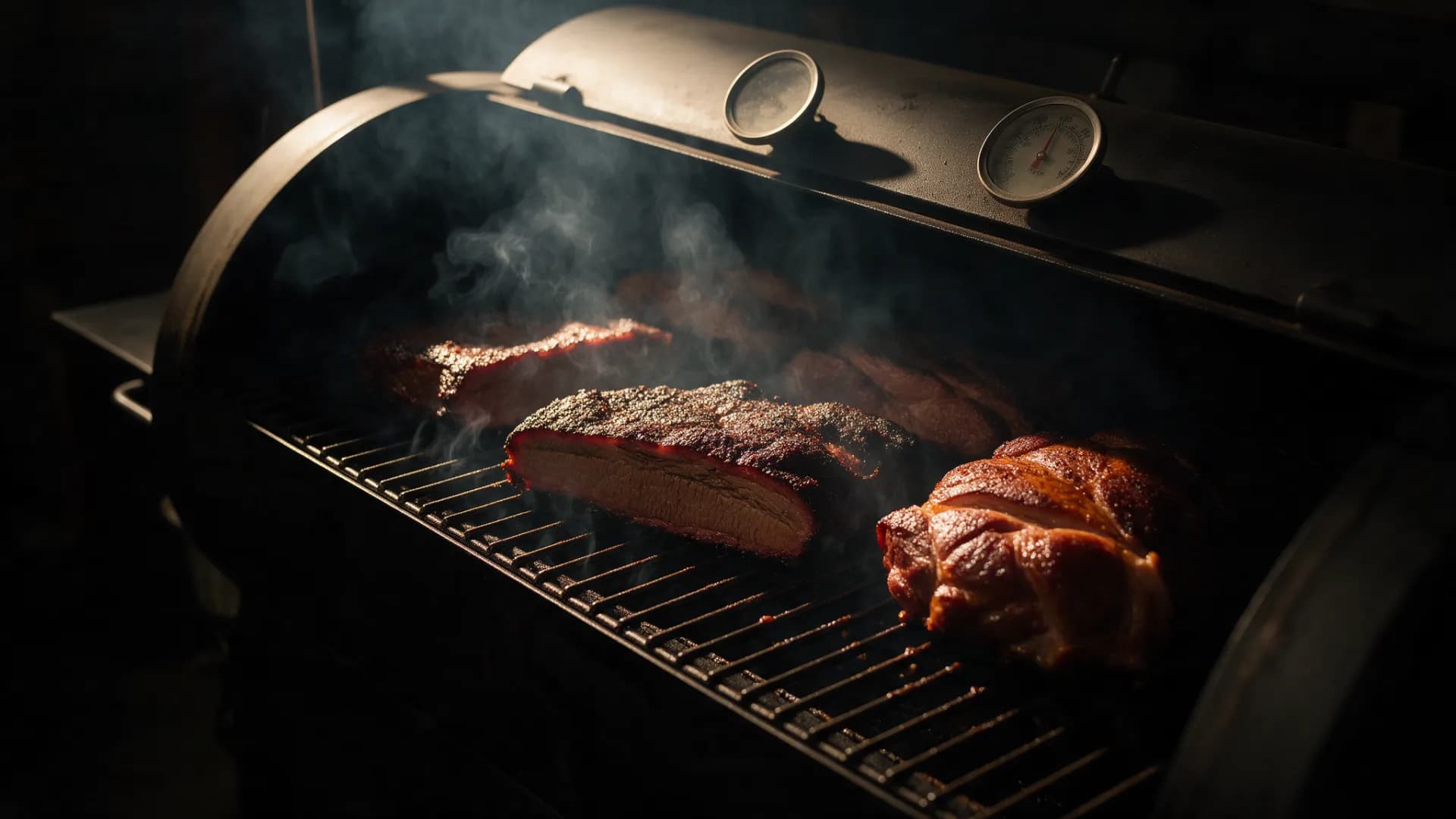
Run the pit at about 110–130°C and leave the shoulder unwrapped until the bark is set. Set means dry, and the rub doesn't come off when you touch it. Without sugar or paprika it won't go dark. On my leg it stayed a golden tan with the rosemary still green, so judge it by touch rather than colour (what bark actually is).
How long that takes varies a lot. My leg was there in 2 hours. Weber's shoulder recipe gives it 4½ hours.
Into a tray of stock
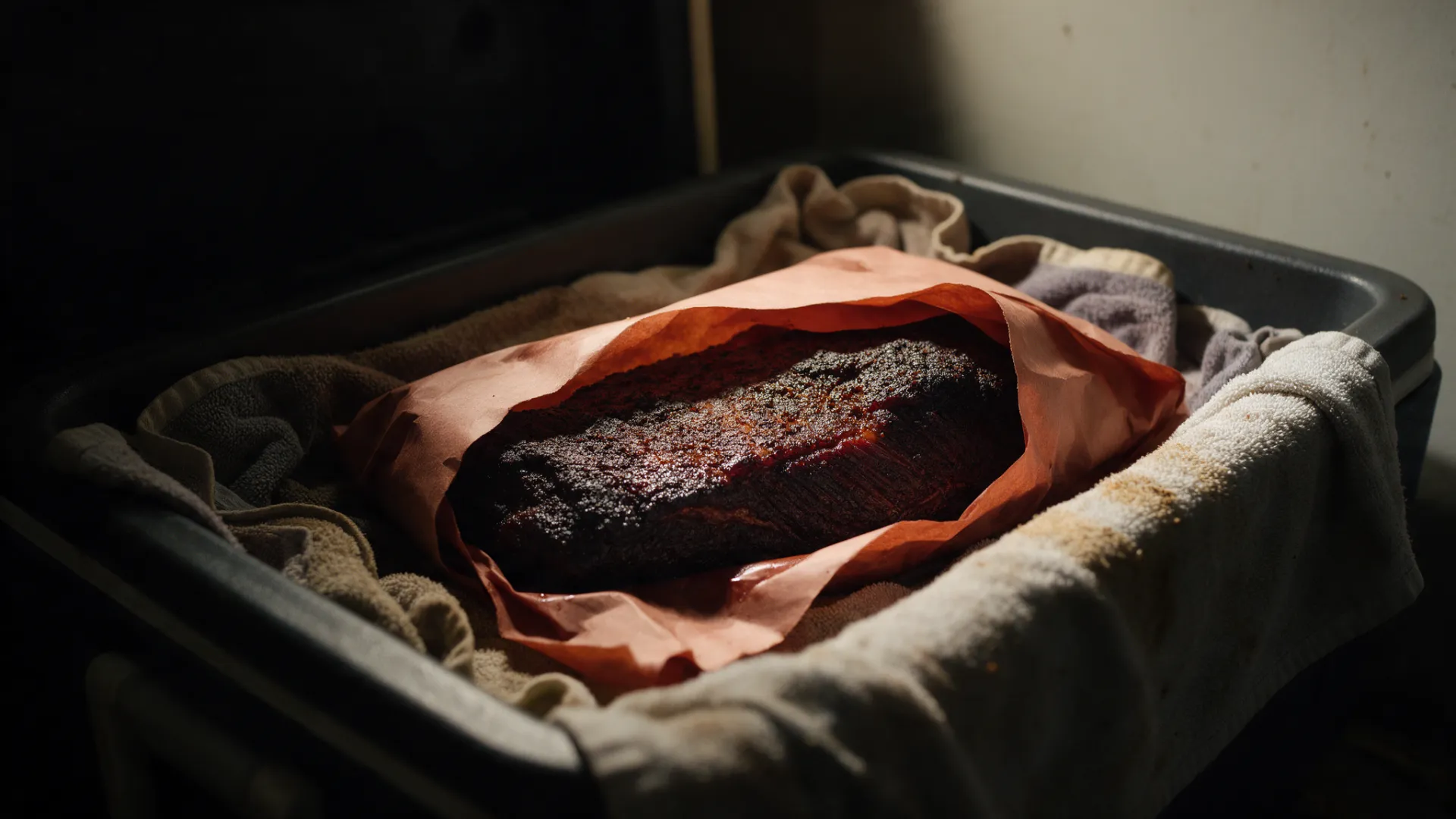
Once the bark's set, put the shoulder in a deep foil tray with about 250 mL of warm stock and a splash of vinegar, and seal it tight. In the tray it braises. The liquid stops it sweating, so it doesn't stall the way a dry cook does, and it holds everything around 100°C, so it softens fast (butcher paper vs foil vs naked). The bark goes soft in there though. That's the trade.
If the pit runs hot, check there's still liquid in the tray. Once it boils dry the tray's just an oven.
Why a wet tray can finish early
On my mutton leg the wrapped part ran at about 17.7°C an hour, roughly three times faster than a paper-wrapped brisket flat of the same weight. I'd planned about 6 hours and it was done in 4 hours 2 minutes. So with a tray of stock, the risk is finishing early.
Meat probe, °C, one mutton leg on 8 August 2026 (a leg, not a shoulder)
- 12:00, 53.5°C: Sealed in the tray of stock
- 12:55, 72.2°C: Pit dropped to 105–110°C
- 14:02, 89.2°C: Probe tender: pulled
- 10:54–11:42, unwrapped: 25°C an hour
- 11:42–12:01, around the wrap: 17°C an hour
- 12:01–12:26, sealed in the tray: 18°C an hour
- 12:26–12:55, sealed, speeding up: 23°C an hour
- Sealed in the tray, 12:00 to 14:02: 17.7°C an hour on average
1.7 kg bone-in leg, sold as lamb, almost certainly mutton or hogget. On at 10:00, pulled at 14:02: 4 h 02 min, against about 6 hours planned. Pit dropped to 105–110°C at 12:55. Shaded: sealed in the tray.
See the readings as a table
| Time | Meat |
|---|---|
| 10:54 | 28°C |
| 11:42 | 48°C |
| 12:00 | 53.5°C (sealed in the tray of stock) |
| 12:55 | 72.2°C (pit dropped to 105–110°C) |
| 13:27 | 83.3°C |
| 14:02 | 89.2°C (probe tender: pulled) |
When I saw it racing I dropped the pit to about 105–110°C. The pit is a brake. I didn't hold it in an esky for hours either, because a long hot hold just keeps cooking it and dries it out (resting and holding). I lifted it out of the hot stock, let it cool on the bench, then reheated it before carving.
When is smoked lamb shoulder done?
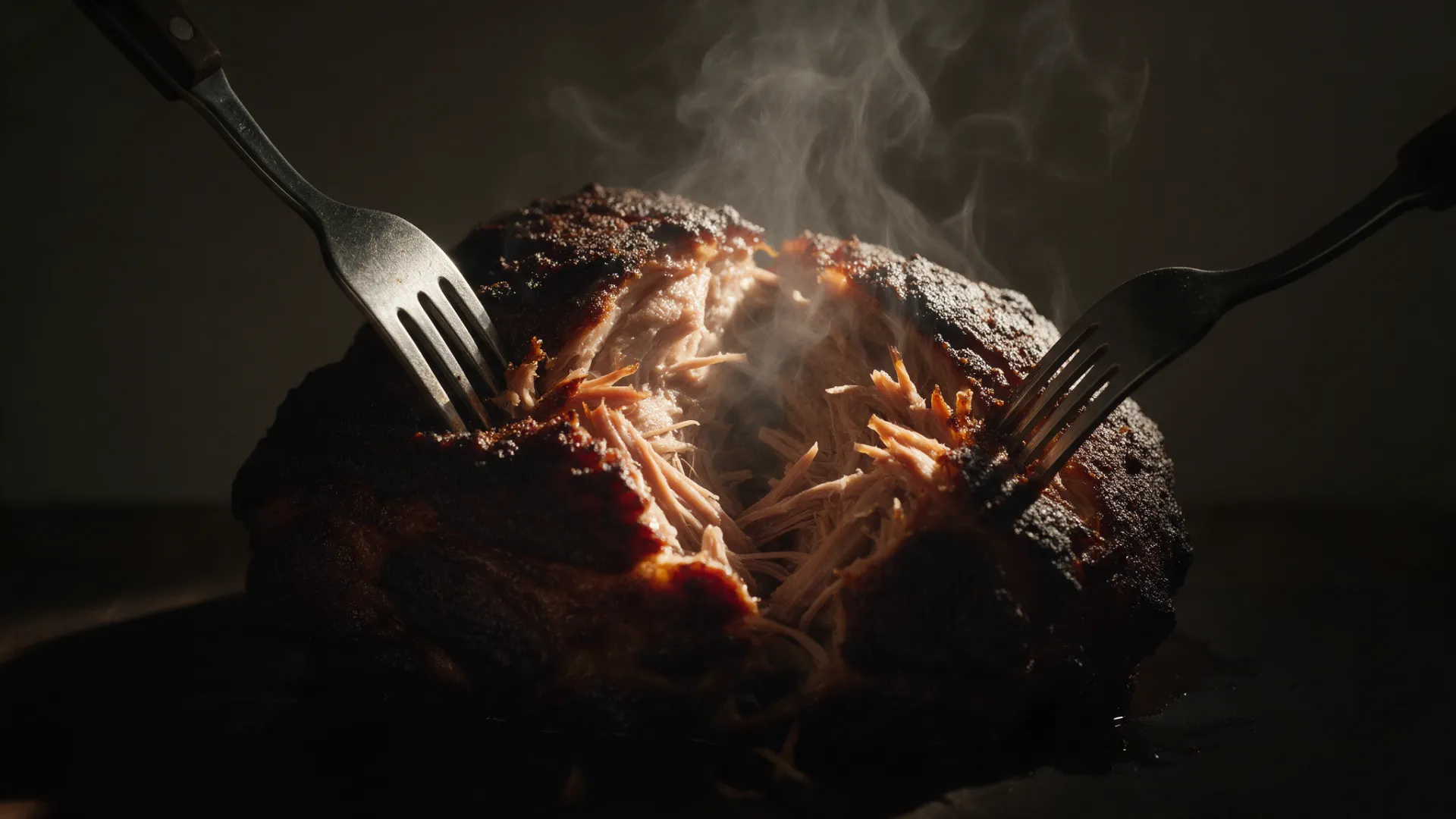
Decide before you light the fire, because pulled and sliced finish at different points. For pulled lamb keep going to about 93–96°C (199–205°F), until a probe slides in everywhere with no resistance and the meat comes apart with two forks. For slices, take it off when it first probes tender, around 88–92°C (190–198°F).
Feel beats the number. My leg felt soft all over at 89.2°C and I pulled it there, well ahead of the 6 hours I'd planned. "Crazily soft and a perfect slicing texture, the meat was juicy." That's a leg though, and a leg's leaner than a shoulder.
Whole lamb is safe at 63°C (145°F) plus a short rest, so the long cook is all about tenderness (food safety in low and slow).
Pull it and serve it hot
Rest the shoulder covered for at least 30 minutes. Then shred it with two forks, pull out the bones and skim the fat off the juices before you pour them back over. Serve it hot, on warm plates, with the juices hot too. Lamb fat that's lovely hot turns waxy on a cold plate. On the leg I reheated the juices hard right before serving and poured them over the slices.
If someone at the table doesn't like smoke, BBQ for people who don't love smoke has the options.
Quick answers
What temperature is smoked lamb shoulder done?
It depends how you want to serve it. For slices, take it off when a probe slides in easily, usually around 88–92°C (190–198°F). For pulled lamb, keep going to about 93–96°C (199–205°F). Whole lamb is safe at 63°C, but a boned and rolled shoulder needs 75°C in the centre. A smoked shoulder passes both long before it's tender.
What's the difference between lamb, hogget and mutton?
Age, measured by teeth. Lamb is under 12 months old or has no permanent incisors in wear. Hogget has one or two, and mutton has more. Older sheep have tougher connective tissue and a stronger flavour, carried mostly in the fat. For smoking, older meat suits a longer, wetter cook, and trimming the fat keeps the flavour milder.
Bone-in or boneless lamb shoulder for smoking?
Bone-in, as an oyster cut, is the easier smoke. It holds its shape, and it's the cut most smoker recipes are written for. A boned and rolled shoulder cooks more evenly and slices neatly, but the rolled centre has to reach 75°C (167°F). So cook it right through and don't serve it pink.
For the curious
The shoulder cuts (square cut 4990, oyster cut 4980, rolled 5056 in the code list) are from the AUS-MEAT RFP cut code list (2023) and MLA's lamb primal cuts poster (2021). Thomas Foods' product pages describe which bones stay in. The lamb and mutton definitions are from the Export Control Order 2019 and MLA's Sheep Assessment Manual, which also defines hogget. The age and eating-quality results are Walker et al. 2005 and Pethick et al. 2006, both with roast and grilled cuts. Watkins et al. 2014 traced the sheepy odour to branched-chain fatty acids in the fat. CSIRO's tallow infosheet gives the titre of mutton tallow as 45–48°C, against 42–45°C for beef and 36–40°C for lard. The recipe's pit range, rest and timing are from Weber Australia's smoked lamb shoulder recipe. The food-safety numbers follow FSANZ, SA Health and Food Safety Information Council guidance, checked 26 October 2026.
If you're between Rockhampton and Bundaberg and would rather someone else looked after the pit at your next event, that's what I do. Get a rough price →